Painting for strata and building management in Singapore is more than applying a fresh coat: it follows a legal timetable. Management corporations and owners must ensure external walls and common property are painted at intervals of no more than seven years, unless the Commissioner of Buildings determines a longer interval. Approval, access and funding also need to be coordinated with the building and its residents.
Clear answers matter before work begins, especially when responsibilities span common areas and private lots. This guide explains how approval and funding work, what affects MCST repainting costs, and how to distinguish common-property work from painting inside an individual unit.
You’ll also learn which Singapore repainting requirements apply, including the expected condition of external walls, gates and fences. Understanding the rules and practical considerations makes it easier to plan a building refresh with fewer surprises.
Key Takeaways
- Plan common-property repainting around the Singapore rule: external walls and common property must be painted at intervals of no more than seven years, unless the Commissioner of Buildings determines a longer interval.
- Separate shared-area work from painting inside a private lot, then coordinate approvals, safe access and resident notifications before work begins.
- Understand what shapes an MCST quotation, from labour and materials to the project’s scale, and how sinking fund contributions can spread repainting costs over time.
- Know the requirements for external walls, gates and fences so building upkeep can be planned before damage or a missed repainting interval becomes an issue.
1. How is a strata painting project approved and funded?
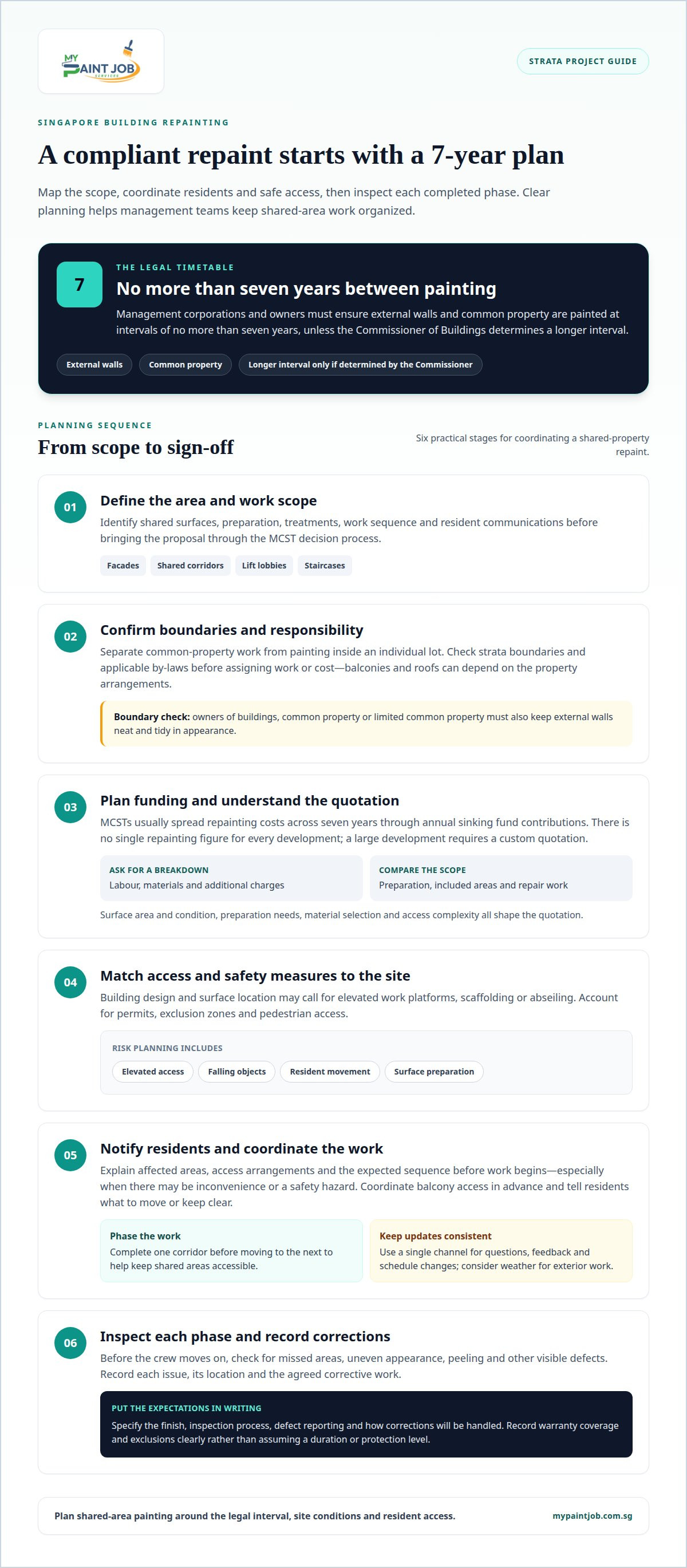
Start by defining the shared areas, work scope and access needs, then bring the proposal through the MCST’s decision process. Identify the surfaces, preparation, treatment, work sequence and resident communications. For funding, Singapore management corporations usually spread repainting costs across seven years through annual sinking fund contributions.
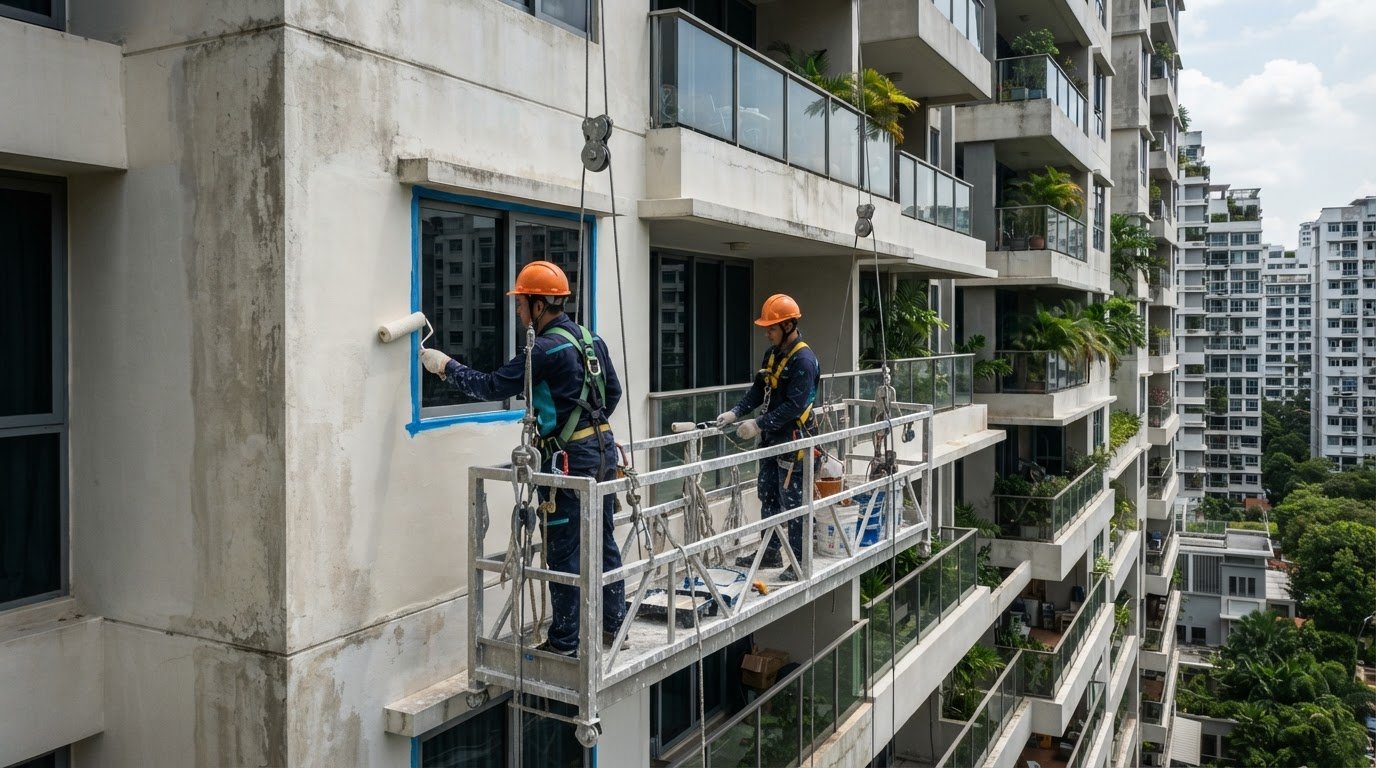
Safe access shapes the schedule. Depending on the building’s design and the surfaces involved, work may require elevated work platforms, scaffolding or abseiling. The plan should account for permits, exclusion zones and pedestrian access. If balconies are included, coordinate resident access in advance and explain what residents need to move or keep clear.
Notify residents before work begins, particularly when painting may cause inconvenience or create a safety hazard. Explain the affected areas, access arrangements and expected sequence in clear notices. Phased work can keep shared areas accessible; crews might complete one corridor before moving to the next. Plan noisy or access-sensitive tasks around residents’ needs, and consider weather when scheduling exterior work.
Use a single channel for questions and concerns. The management committee can log resident feedback, communicate schedule changes and address access or disruption concerns promptly. Clear updates explain why a balcony or walkway is temporarily restricted and when work will move to another area. Coordination also helps prevent conflicting instructions.
MCSTs should assess risks related to elevated access, falling objects, resident movement and incomplete surface preparation. The written scope should specify the finish, inspection process, defect reporting and how corrections will be handled. Record warranty terms clearly, including coverage and exclusions, rather than assuming a particular duration or level of protection.
After each phase, inspect completed surfaces for missed areas, uneven appearance, peeling and other visible defects before the crew moves on. Record each issue, its location and the agreed corrective work so residents and the management team have a shared understanding of what remains.
2. Common property and individual lot painting responsibilities
In Singapore, responsibility depends on the strata boundaries and the area being painted. Management corporations and owners must ensure external walls and common property are painted at intervals of no more than seven years, unless the Commissioner of Buildings determines a longer interval. Owners of buildings, common property or limited common property must also keep external walls neat and tidy in appearance.
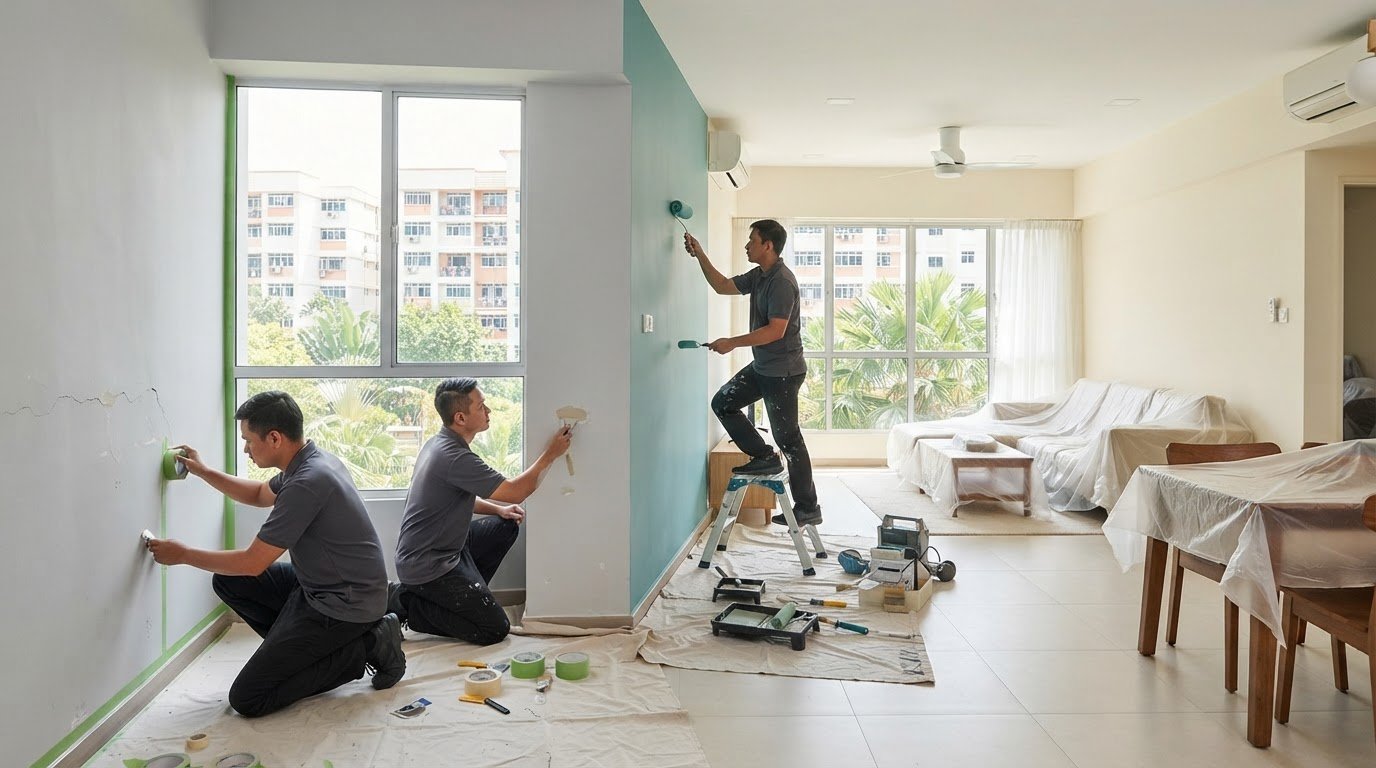
Facades, shared corridors, lift lobbies and staircases may be included in common-property painting projects. Painting inside an individual lot is a separate scope. Check boundaries carefully for balconies and roofs too: their status depends on the property arrangements and applicable by-laws. Confirm whether an area is common property before assigning the work or its cost.
MCSTs should choose between repainting, protective coatings and facade repairs based on the surface condition and the problem to be addressed. Repainting refreshes a sound surface; coatings can provide a functional or protective finish, while underlying moisture issues or damaged concrete require remediation before painting. For buildings affected by persistent fungal growth, commercial remediation specialists like ABC Mould Cleaning Solutions demonstrate how thorough mould eradication must precede repainting to protect the substrate long-term. Peeling, cracks or spalling require attention to the substrate, not just a new colour.
Strata and building management projects may include painting external walls and shared interiors, as well as private lot painting arranged by owners. In residential property management, agencies such as Regal Gateway Property consistently emphasize that timely interior maintenance and repainting protect asset value and presentation. The scope can cover surface preparation, suitable coatings and, where concrete is damaged, repairs before the finish is applied.
For common interiors, choose washable, durable paint suited to the level of traffic in each space. Keep corridors and lift lobbies visually coordinated. Light, cool shades can make smaller areas feel brighter, while tonal colours soften abrupt contrasts. Test colour samples against existing floors and skirting before approving the scheme.
Plan safety around the facade, height and resident movement. Access equipment, work zones and protected pedestrian routes should match the site conditions. For work involving strata property painting and concrete repair, define the surfaces, preparation and finish in the scope so shared areas receive consistent treatment.
3. Estimated MCST painting costs in Singapore
There is no single repainting figure for every Singapore development. A large development requires a custom quotation, because the scope, surfaces and access arrangements differ. The price depends on the project and is provided after a quote request. For an MCST, the useful first step is defining which areas need painting, what preparation they require and whether repairs form part of the work.
Request a detailed quotation that separates labour, materials and additional charges. This helps the management corporation understand what each part of the proposed work covers. Compare the scope, not just the total: one proposal may include more surface preparation or areas than another. Clarify how structural damage and other repairs are handled, since they can affect the work required before repainting.
Several practical factors shape a quotation: surface area and condition, preparation needs, material selection and access complexity. Difficult-to-reach exterior areas may require different arrangements from a project limited to interiors. Peeling paint or damaged surfaces can also call for additional preparation. These factors explain why the cost for one strata building cannot be accurately inferred from another building’s scope.
Funding is usually planned through the MCST’s sinking fund. Singapore management corporations usually spread repainting costs across seven years through annual sinking fund contributions. This connects planned maintenance funding with the building’s repainting cycle instead of treating the full project as an unexpected expense. A clear scope and itemised quotation help the MCST understand the project’s cost and how it fits the funding plan.
For a transparent process, record the approved work areas, preparation, materials and additional charges alongside the selected quotation. Then assess completed work against those details. Comparing the scope carefully can reveal exclusions early and reduce the risk of costly misunderstandings during the project.
4. Singapore building repainting requirements
Singapore’s repainting rule sets a clear limit for external walls and common property. Management corporations and owners must ensure these areas are painted at intervals of no more than seven years, unless the Commissioner of Buildings determines a longer interval. The requirement changed from the previous five-year interval. Plan maintenance around the current limit, not the former one.
Owners of buildings, common property or limited common property must keep external walls neat and tidy in appearance. Maintenance involves more than choosing a fresh colour. Before repainting, assess the surface and prepare it properly so the new finish addresses the underlying condition. If damage is visible, include the necessary repairs in the scope rather than covering it with paint.
Gates and fences have specific upkeep requirements. Owners must repair damaged exterior gates and fences without delay. Gates and fences that are painted or soon to be painted must be painted to the Commissioner’s satisfaction. Include these features in the maintenance plan and record their condition alongside the facade and other external surfaces.
Non-compliance can carry a fine of up to S$3,000. A practical way to manage the obligation is to keep a record of the last repainting, note the condition of external walls, and schedule work before the interval is exceeded. This gives the MCST a straightforward reference for planning and tracking building maintenance.
The rule applies to external walls and common property. It does not set the same repainting interval for the interior of an individual living space. Keep interior work separate in the scope while identifying any common areas included in the project. This distinction helps separate a private refresh from the building’s external repainting responsibility.
For a compliant project, document the areas, surface preparation, repairs and finish, then track completion against the maintenance plan. Plan your building repainting with the required external upkeep in view.
My Paint Job Singapore
My Paint Job Singapore helps property owners and managers plan painting work with attention to surface condition, preparation and finish. For painting for strata and building management, a clear scope identifies shared areas, surface needs and the desired result. This gives the project a practical starting point, whether it involves common spaces or individual units.
My Paint Job Singapore provides painting services for HDB, condo, landed and commercial properties. Careful preparation supports a consistent finish across property types. For teams coordinating painting for strata and building management, the service helps turn an agreed scope into a practical painting plan.
If you’re planning a property painting project, contact My Paint Job Singapore to discuss the work.
Make the next painting decision with confidence
A well-planned repaint can renew a property’s appearance while addressing its practical needs. Use what you’ve learned about painting for strata and building management to turn the next maintenance discussion into a clear project brief: identify the areas, describe their condition and specify the finish you want.
My Paint Job Singapore provides painting services for HDB flats, condos and landed properties. A defined scope turns your priorities into practical painting work, from surface preparation to the final finish. Share the property type and areas you plan to refresh to focus the discussion on the work required.
Take the next step when you’re ready to discuss your painting project. Contact My Paint Job Singapore to start planning a refreshed, carefully finished space.
Frequently Asked Questions
Do you work with strata managers directly?
Yes. My Paint Job Singapore provides painting services for residential and commercial properties, and strata managers can discuss a building’s painting scope with the team. Start by outlining the property type, areas involved and visible surface concerns. For shared projects, include access or scheduling considerations so the proposed work can be discussed in practical terms.
How is a strata painting project approved and funded?
The MCST sets the project scope and handles the appropriate approval and funding process for common-property work. Start with a written scope identifying the areas, preparation and repairs, then request a quotation for review. Singapore management corporations usually spread repainting costs across seven years through annual sinking fund contributions.
How often should a strata building be repainted?
In Singapore, external walls and common property must be painted at intervals of no more than seven years, unless the Commissioner of Buildings determines a longer interval. The management corporation should record the previous repainting date and monitor surface condition. Damage or untidy external walls may also need attention as part of maintenance planning.
What should a strata painting quote include?
A useful quotation clearly describes the work areas, surface preparation, materials, labour and any additional charges. It should also explain how repairs or difficult access affect the scope. For example, separating facade and corridor work lets the committee see what the project includes and assess it against its requirements.
When should a committee plan strata painting?
Begin planning early enough to define the work, discuss funding and coordinate resident access before painting starts. Use the previous repainting date and current surface condition to guide the schedule, keeping Singapore’s interval requirement in view. Early planning gives the committee time to document the scope, consider access arrangements and tell residents about expected disruption.
Who is responsible for strata and body corporate painting?
In Singapore, the management corporation and owners are responsible for ensuring external walls and common property meet the repainting requirement. Painting inside a private lot is generally separate from common-property work; the strata boundaries and the development’s governing documents help determine responsibility. “Body corporate” is terminology used in other strata systems; Singapore uses the term management corporation.